Museum of Feelings
Welcome to the Museum of Feelings. Please touch everything. Shout if you need to. Cry if you want to. Nothing here is behind glass.
About the production
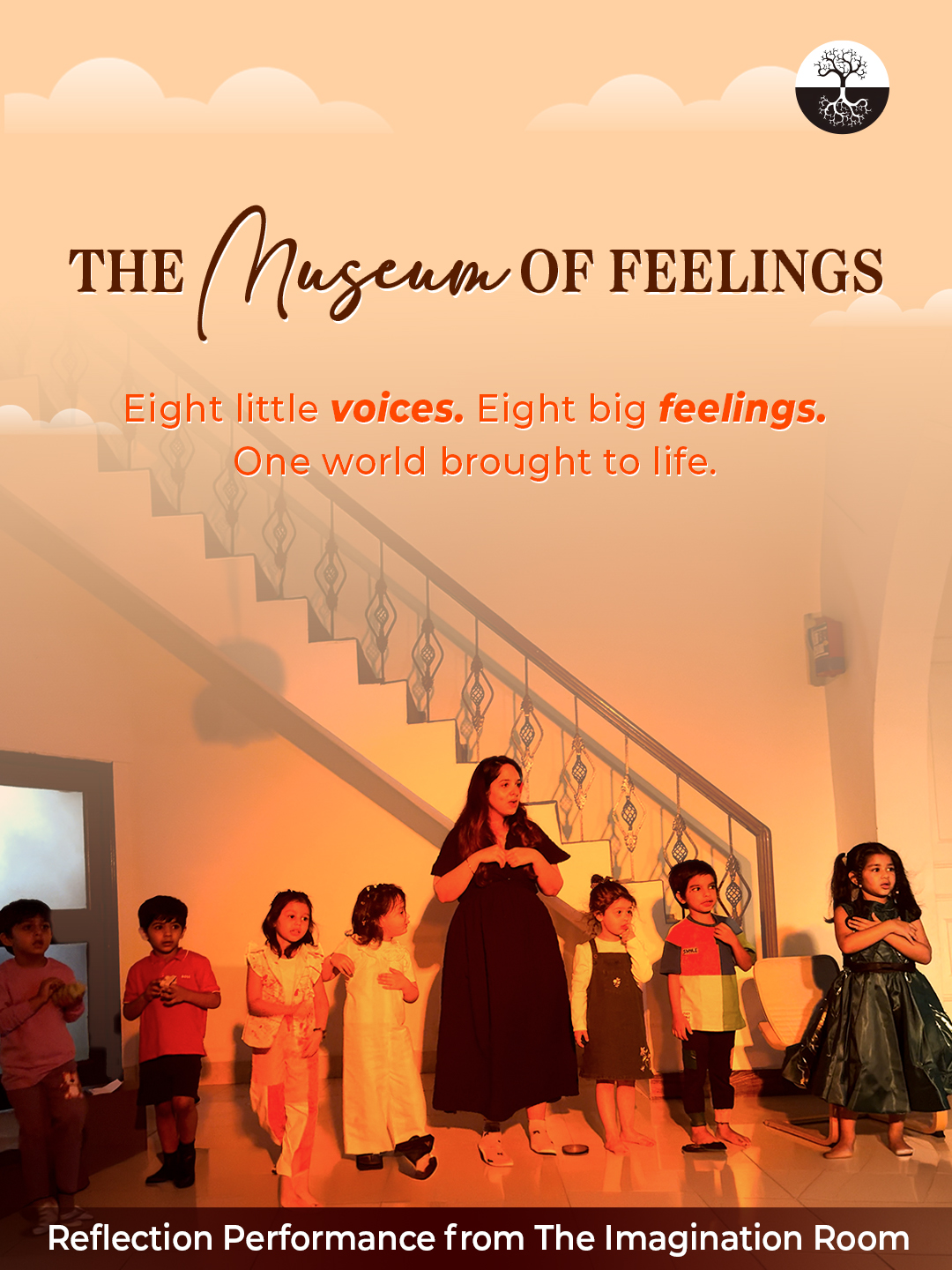
Museum of Feelings is a theatre production by The Roots India, created with Absorbent Mind and performed by children aged three to five. It imagines a museum where the exhibits are not objects but emotions, and where every feeling, from the loudest to the quietest, is allowed to step out of its frame and express itself freely, without anyone asking it to calm down, cheer up or wait its turn.
The idea
A museum is a place where things are kept still, labelled and admired from a distance. Feelings are the opposite. They move, they spill over, and they refuse to stay in their frames. The production lives inside that tension. Its exhibits begin as neat displays, each feeling standing quietly beside its label, and then, one by one, they come alive and break the rules.
No feeling is ranked above another, and none is sent away for being too much. The museum has only one rule: every feeling belongs.
Why feelings, why so young
Children between three and five feel everything at full volume, often before they have the words for it. It is the age at which a lost toy can be a tragedy and a soap bubble a miracle. It is also the age at which many begin to learn which feelings are welcome and which should be hidden: that anger is naughty, that tears are for babies, that fear is something to be embarrassed about.
The production starts from a different belief. Feelings are not problems to be managed; they are information, energy and a way of meeting the world. A child who can name a feeling, show it and see it accepted is not being taught to behave. They are being given a language, and with it the confidence that their inner world is worth expressing.
Theatre is uniquely suited to this. On stage, a feeling can be given a body, a costume, a voice and a place to stand. It can be looked at, played with and shared, without anyone being in trouble for it. For a three-year-old, that is not a lesson. It is simply play, and at this age, play is where the deepest learning happens.
The galleries
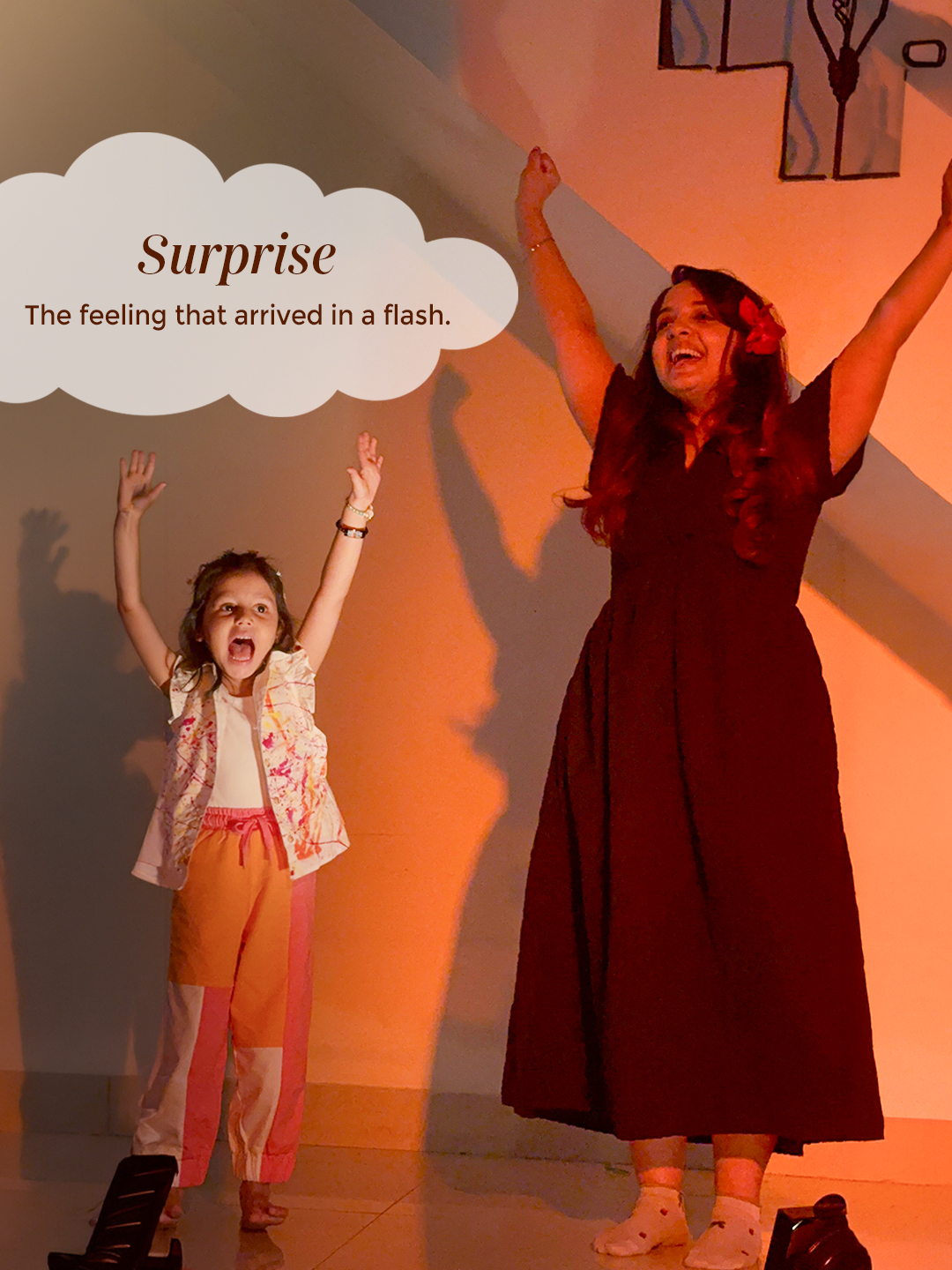
Joy refuses to stay in one room. It runs, it spins, and it laughs at nothing in particular.
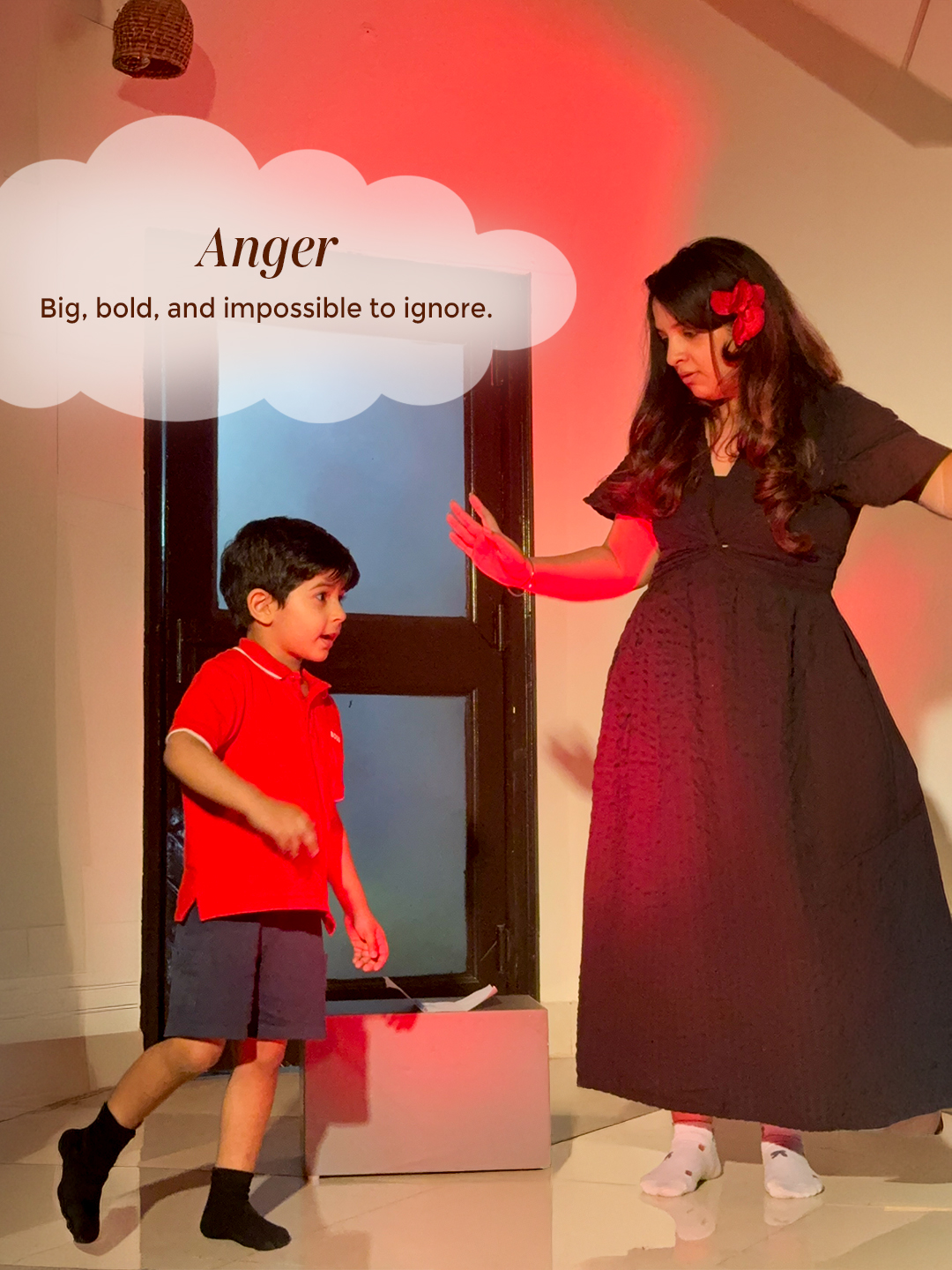
Anger stamps its feet and turns red, and for once, nobody tells it to stop. Here, it is simply heard.
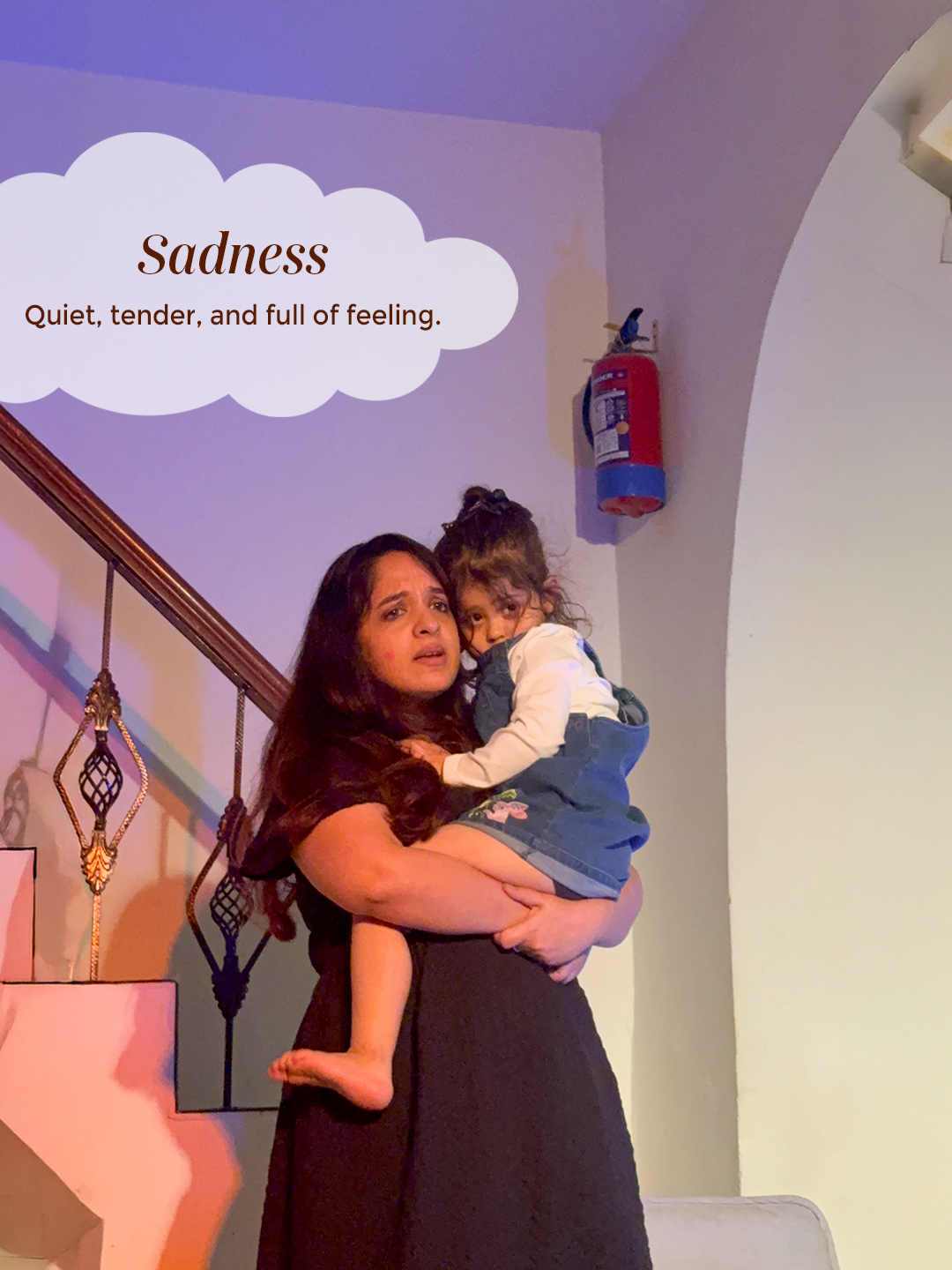
Sadness sits down in the middle of the floor and is not hurried along. Someone sits beside it.
Fear hides behind the curtain, peeks out, and hides again, until it discovers it is not alone.
And in the quietest corner, Shyness waits to be noticed, and is.
What happens when the feelings meet one another is a story the children tell best.
How it was made
You cannot hand a three-year-old a script and ask them to perform sadness, so we did not try. The production was built through play. In workshops, the children showed us what each feeling looked like in their own bodies: how joy jumps, how anger stomps, how sadness slumps and how fear curls up small. Their movements, sounds and expressions became the choreography, so every feeling on stage was performed the way the children themselves experience it.
The design followed the same logic. Each feeling was given its own colour, texture and shape, so that even the youngest performer, and the youngest audience member, could recognise it at a glance. Costumes were made to be worn, not managed: soft, light and easy to move in, because a feeling that cannot move is not free.
Behind the playfulness sat careful planning. With performers this young, nothing can be left to chance, so the production was mapped across 21 departments, scheduled day by day, and run on show day from a detailed run sheet. The structure was firm so that the children never had to be.
The exhibits have gone home now. The feelings went with them, a little louder and a lot more welcome.
Gallery