Armstrong Warehousing
Armstrong is a Pune-based provider of warehousing products and solutions, the systems that govern how goods are stored, moved and retrieved inside a business.
The brief
Armstrong is a Pune-based provider of warehousing products and solutions, the systems that govern how goods are stored, moved and retrieved inside a business. For a customer engagement, they asked for something other than a guided tour of machines and specifications. The request was deceptively simple: make the audience feel what Armstrong does.
The paradox
Warehousing suffers from a peculiar marketing paradox: the better it works, the less anyone notices it. Its value is counterfactual. It lives in the stock that was not lost, the order that was not late, the expansion that did not stall, the weekend that was not spent firefighting. A specification sheet can describe a machine, but it cannot describe an absence, and absence is precisely what a good warehouse delivers.
This is the condition of all infrastructure. Roads, plumbing, electricity and logistics are noticed only at the moment they fail; their success is silence. Brands that sell infrastructure therefore face a strange task. They must make people value something whose greatest achievement is never being thought about.
The wider problem
Industrial brands have long spoken the language of specifications: capacity, load, throughput, efficiency. It is a language of precision, and it assumes a rational buyer who weighs features and picks the best. That buyer is largely a fiction. Business decisions are made by people, and people decide with the same mix of fear, hope, fatigue and ambition they bring to everything else. The spreadsheet usually arrives afterwards, to justify a choice that was already felt.
Then there is the problem of abundance. When every competitor can list the same capacities and features, information stops being a differentiator and becomes noise. The scarce resource is no longer information but attention, and attention is not won by adding more facts. It is won by meaning. The task was not to inform the audience better, but to let them feel the difference.
The insight
Businesses do not buy equipment; people buy a better version of their working lives. Behind every procurement decision is someone who has lain awake over a missed shipment, watched growth stall for lack of space, and wondered whether they are running the business or it is running them. That person, not the machine, is where the decision is really made.
If the value of a warehousing solution is a change in a person’s life, then the most honest way to present it is through a person whose life changes. So instead of presenting the product, we built a human being, and split him across time.
A man in three tenses
Our protagonist exists in three tenses at once.
The Sad Self is the past and, for many in the audience, the present. Overwhelmed by lost stock, late orders and shrinking space, he is convinced his business is doomed. He is not a caricature but a mirror, built to be recognised.
The Happy Self is the same man after Armstrong’s solutions have restored order: calm, in control, and reminded of why he started the business in the first place. He is proof, the change made flesh.
The Visionary Self is the future he never allowed himself to imagine. Freed from the daily emergency, he thinks not about survival but about scale, new markets and the next chapter. He is aspiration, the self that only becomes thinkable once the foundations are secure.
Together, the three selves turn a product into a narrative of transformation. Armstrong never appears as the hero of the story. It appears as the hinge on which a life turns, which is a far more persuasive place for a brand to stand. Heroes are admired; hinges are needed.
Why theatre
A film could have told this story, and a brochure could have described it. Neither could do what live performance does: place one human being in front of another and ask for their attention.
Theatre is the oldest technology of persuasion we have, and it works because presence creates obligation. When someone speaks to you directly, looks you in the eye and confides a problem, you cannot scroll past them. You listen, you respond, and in responding you become part of the story. The audience stops being an audience and becomes a participant, and people remember what they took part in far longer than what they were shown.
The experience
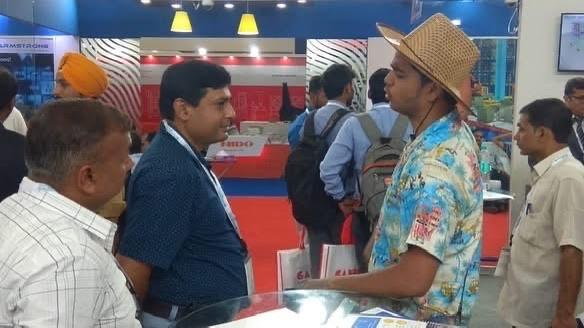
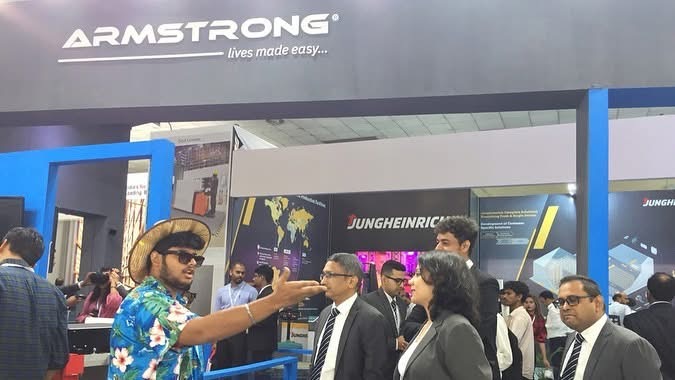
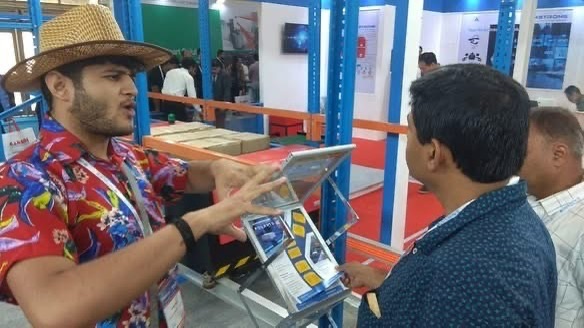
The engagement unfolded as a sequence of personal encounters rather than a performance. The Sad Self approached guests one to one and confided his troubles, inviting sympathy before any product was mentioned. He then asked them to meet his Happy Self, who explained what had changed and how. The Happy Self, in turn, introduced them to the Visionary Self, where the conversation moved from problems solved to possibilities opened.
Each handover was a small act of persuasion disguised as hospitality. Guests were never told to move forward; they were invited, and by accepting, they walked the buyer’s journey on their own feet.
Why it worked
It disarmed resistance. Audiences at brand events arrive expecting to be sold to, and that expectation makes them sceptical. A man in distress asking for a listening ear triggers empathy rather than defence, so the message arrived before the guard went up.
It made the invisible visible. Because warehousing’s benefits are largely absences, the experience placed the before and after side by side in human form. The distance between the Sad Self and the Happy Self did what no specification could: it gave the disappearance of a problem a face.
It invited self-recognition. Anyone who has run an operation saw something of themselves in the Sad Self. Persuasion is strongest when the audience reaches the conclusion on its own, and here they did: if he could change, so could they.
It ended on aspiration, not utility. The Visionary Self reframed Armstrong from a supplier of equipment into a partner in growth. Features answer the question of what a product does. Vision answers the more powerful one: who the customer could become.
Beyond Armstrong
The lesson reaches well beyond warehousing. As products grow more alike and information more abundant, every brand that sells invisible value, from logistics and software to insurance and infrastructure, will find that facts alone no longer persuade. What persuades is a story the customer can step inside.
The Armstrong engagement points to a different model for business communication: not a presentation of features, but a staged encounter with change. In that model, the product is not the subject of the story but its turning point, and the customer is not the audience but the protagonist.
The machines were never the story. The man they changed was.
Gallery