Allegory of the Digital Cave
Allegory of the Digital Cave is an original play by The Roots India that carries philosophy’s oldest image into the present.
About the play
Allegory of the Digital Cave is an original play by The Roots India that carries philosophy’s oldest image into the present. When the world reaches us through a screen, how do we know what is real, and who decides what we see? The play offers no verdict. It leaves its audience with a question they carry home in their pockets.
A signature IP of The Roots India, alongside the Dastaan-E Project, the play was staged at Ramjas School and will never be staged the same way twice. Each production is re-adapted from a new perspective, with new costumes and new design. The shadows change; the question remains
An old cave, a new light
Plato’s prisoners mistook shadows on a wall for reality. The play uses him not as a story to retell but as a lens that makes the familiar strange. The cave keeps its shape; only the materials change. The wall is now a screen, the shadows a feed, the fire an unseen hand choosing what appears, and the prize for naming shadows a currency of likes and streaks. Plato’s chains needed iron; these need only comfort. And unlike his prisoners, these characters walked in, which makes walking out far harder.
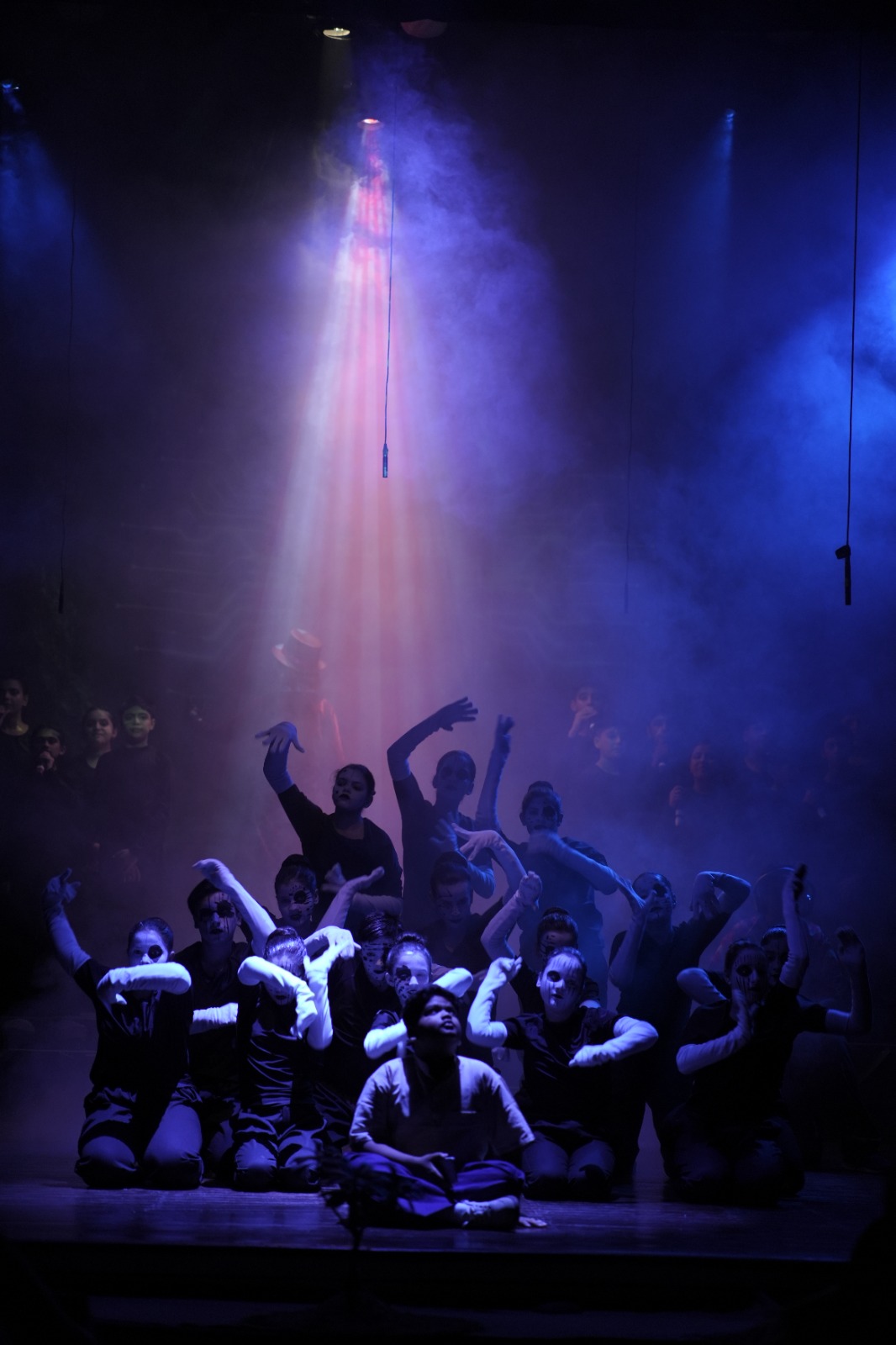
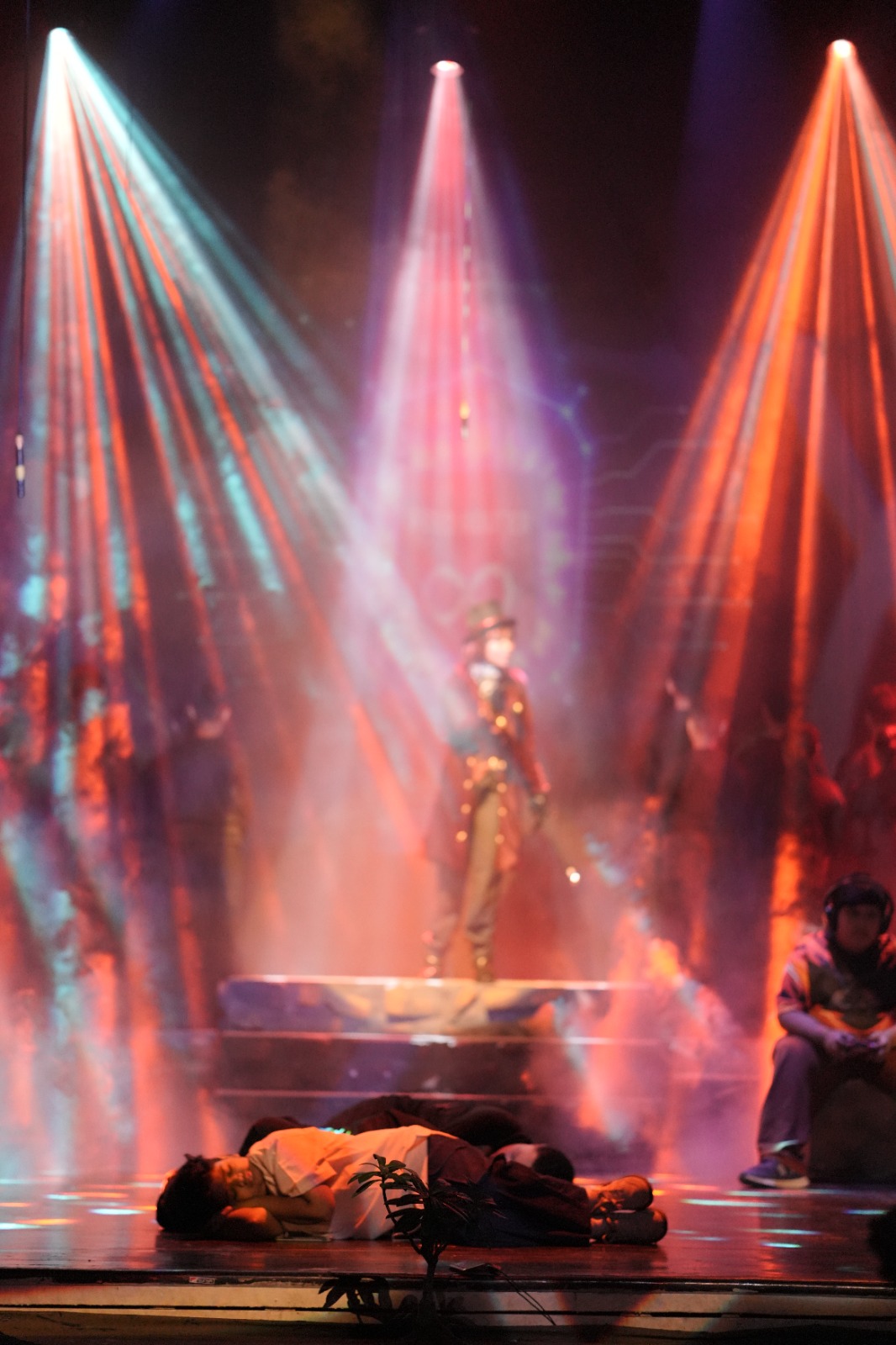
Drawn from real life, each character surrenders to the screen differently. The doomscroller consumes without appetite. The approval-seeker lets an audience decide their worth. The influencer performs a life for views until even a smile is scheduled. The gamer finds a better world inside the game. The fifth is drawn in by a friend and pays for belonging with addiction. Shadows trail them, and Mr. X, whom they trust, watches over them. None would call it a prison, and the play does not judge them for entering. What their trust costs belongs to the stage.
The process: from page to stage
The writing was never the team’s alone. A play about how young people live could not be written entirely from the outside, so students were brought in as collaborators through workshops. Their own pieces and dialogues entered the script, and parts of what the audience hears were written by those living the questions it asks.
The four original songs were written and composed by Team Roots. The lyrics grew from a study of prose and poetry, of how the constraints of each form shape what can be said. The music travelled from classical foundations across a wide range of instruments in search of the right texture. Each song passed through numerous drafts until word and sound became inseparable from the scene.
Costume began as research: what we wear shapes how we think, not only how we are seen, so a costume can lead an actor into character before a word is spoken. The design moved from mood boards to art designs and character sketches, then to the real bodies that would wear them. Fabric was chosen for how it moves and falls, and colour palettes were built so that each world reads clearly on a crowded stage. Everything was gathered into a costume reference deck and a complete prop list.
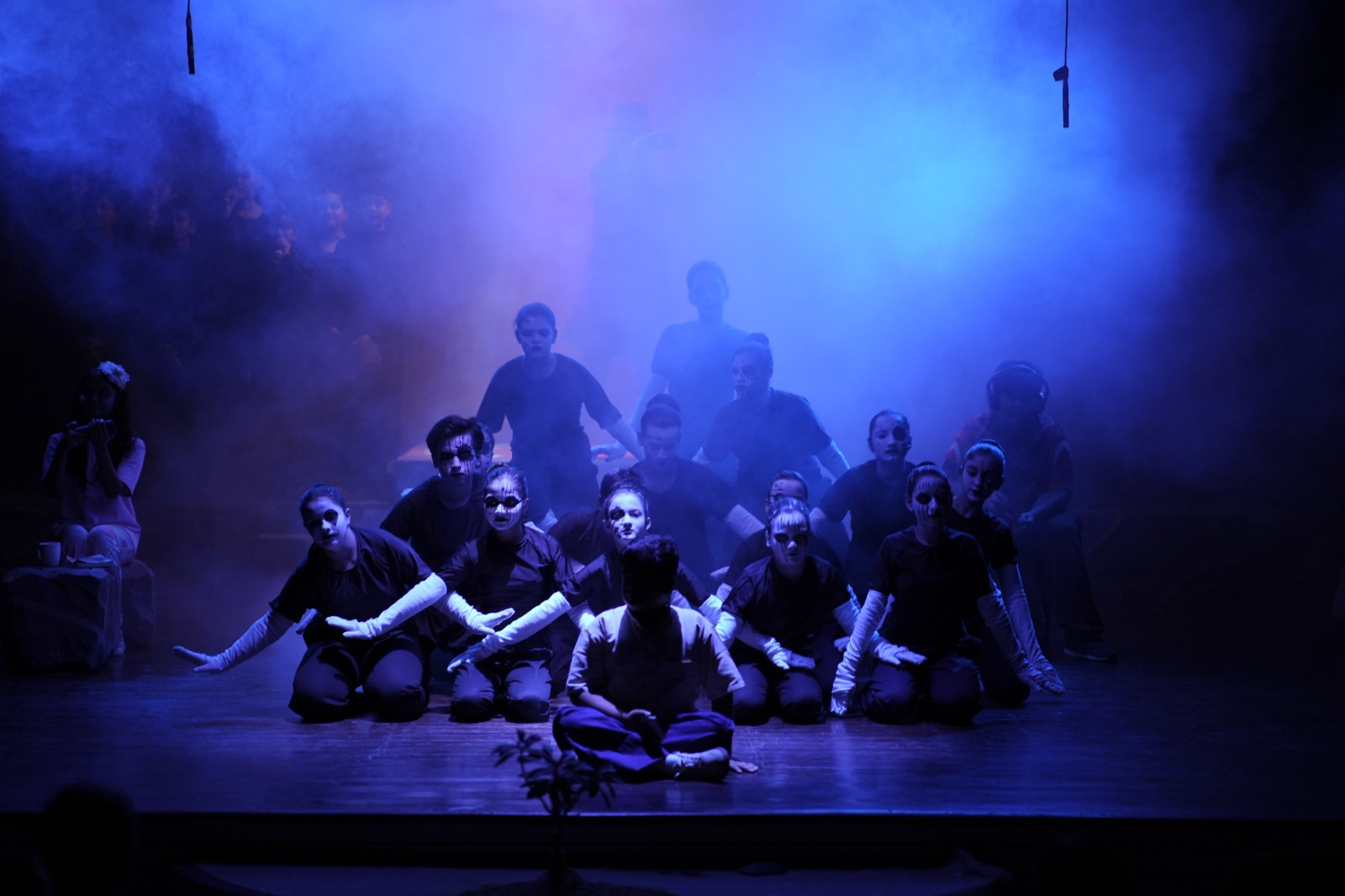
The staging is where these threads converge. With a cast of more than 30 and several stories sharing one space, recurring visual devices give each journey a signature the audience learns to read. The aim is not to explain the cave but to let the audience feel it first and understand it later, so that when the meaning arrives, they realise they were inside it all along.
Gallery